
Mujeres Garifuna:Tradiciones, Memorias y Desplazamientos

Updated: Jul 23
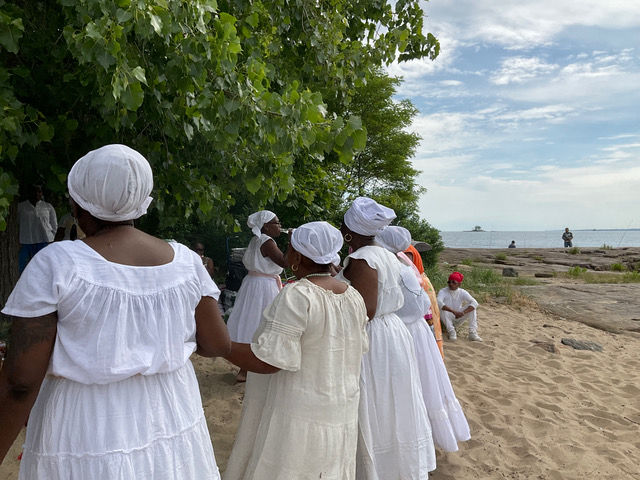
Garifuna people live along the coasts of Belize, Guatemala, Honduras, Nicaragua, and the United States. They share a common origin, language, music, and ancestral placation system. They are genetically and culturally mixed with St. Vincent’s Amerindians (the Carib, Arawak, and Taino peoples in the Lesser Antilles) and West Africans (believed to be of Yoruba, Ibo, and Ashanti descent) who were brought to the new world to be enslaved in 1635 (Greene, 1998, p. 168).
The women in this community have created and safeguarded ancestral traditions that are essential to their social values. As knowledge producers, they are culturally and spiritually engaged in their communities. In other words, Garifuna women are teachers.
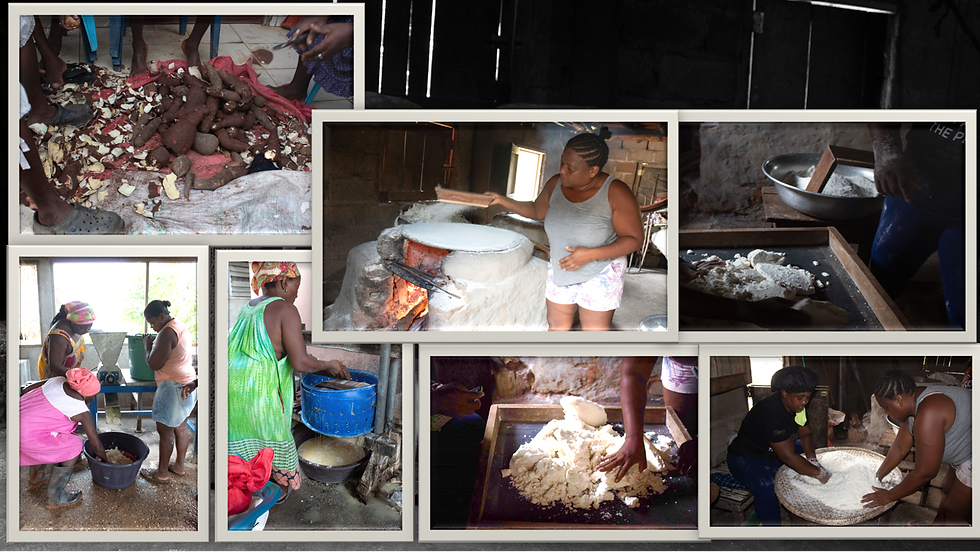
Many Garifuna women play a vital role as community educators by organizing and participating in traditional cultural events such as fedu (traditional Garifuna celebrations), añahani (Casave-making), dugü (religious ceremonies), and arani (home-based remedies). By engaging in these practices, these women have sustained Garifuna cultural heritage and language while reinforcing cultural identity and communal values. Fedu and añahani, in particular, are central forces in the preservation and continuity of the ancestral Garifuna language.
Fedu
This culturally rooted community event, led by Garifuna women, is open to all who wish to engage. Grounded in inclusivity and egalitarian values, it invites participants to actively contribute to the design, planning, and execution of the event. During fedu, Garifuna lead singers—gayusas—sing in the Garifuna language while swaying their bodies to the rhythm of the garawon (drums), played by men.
Añahani
Also known as casave-making, is an ancestral food way through which Garifuna women transform cassava into an edible product known as ereba (called casave in Spanish). As Hall (2019) notes, “Ereba, with its deep cultural roots, is one of the most powerful symbols of grassroots collaborative work among rural Garifuna women” (p. 36). The women who produce ereba draw on knowledge and practices passed down through generations, sustaining both cultural memory and community identity. The tools used in this process are named in the Garifuna language, reinforcing linguistic continuity. As this food production system endures, it not only preserves traditional ecological knowledge but also strengthens the Garifuna language and the collaborative practices that define the community.
The two aforementioned Garifuna cultural legacies, stewarded by women, position Garifuna women as vital oral archivists who have safeguarded collective histories and memories across generations. Through their ancestral archiving practices, they have preserved enduring messages of spirituality, communal labor, resistance, and resilience. Their work also sustains immortalized historical narratives of how the Garifuna resisted and sought refuge from the predatory systems of slavery on the Island of Saint Vincent - our ancestral homeland from which we were forcibly displaced.
Comments